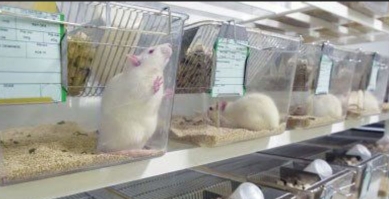


Laboratory animals are an essential component in various fields of research, such as biology and medicine.
In the past, researchers used laboratory animals to study common diseases such as cardiovascular diseases and cancer, and later relied on them to obtain fundamental and basic knowledge in genetics, physiology, and other biological sciences.
Laboratory animals are also necessary for combating, researching, and investigating emerging diseases; AIDS is a prominent example of such diseases.
In addition, laboratory animals are used to study the primary causes of psychological disorders in humans.
Examples of laboratory animals include rabbits, mice, dogs, monkeys, horses, cats, goats, and other animals.
Laboratory animals must possess the required characteristics. They should not become infected or ill easily, and their physical size should be as small as possible so that their maintenance is easier and less costly. Their bodies and housing environments must always be clean and healthy, and these animals should be regularly checked by technicians and laboratory personnel to monitor and assess their health status.
Different animals are used in different research fields. For example, rabbits are commonly used in toxicology and safety testing of substances such as drugs, as well as in chemical and medical research. They are also used in skin and eye studies, including various ocular tests conducted for the development of cosmetic products, personal care products, household products, and other chemical products.
Mice are the most common mammalian species used in research and are usually of the species Mus musculus. Mice are used in studies related to cancer, drug-induced metabolic diseases, and genomics. Rats of the species Rattus norvegicus domestica are bred and maintained specifically for scientific research. In general, rodents serve the scientific community as very important model animals in physiological and biomedical research.
Cats are used as research subjects in visual, auditory, and neurological studies, as well as for investigating immunodeficiency diseases. In general, they are used as models for human diseases. Cats are also used in research on animal diseases such as cardiac surgery, leukemia, and in veterinary studies.
Dogs are used to test the safety of drugs, pesticides, medical devices, and other products. They are also used in a wide range of research fields, including cardiovascular, neurological, respiratory, and dental research.
Goats are used as a specific model in biomedical research and for practicing and training surgical procedures.
Monkeys are used in research only when it is not possible to use other species. They are primarily employed in studies related to brain disorders, structure, and function. Monkeys are also used in research aimed at vaccine development or the treatment of severe infectious diseases. They are of great importance in research because they are closely related to humans.
Horses are currently used in experimental research on fertility and reproduction, genetics and breeding, anatomy, physiology, endocrinology, behavior, neuroscience, immunology, pathology, epidemiology, surgery, post-traumatic injuries, nutrition, animal husbandry, ecology, and environmental studies.
In animal laboratories, certain precautions must be taken. The health status of animals should be checked regularly, and if they are injured or infected, they must be quarantined immediately. These animals should be examined daily.
To restrain a mouse in the laboratory, it should be lifted by its tail, and this must be done very gently and calmly. If the mouse becomes frightened or is handled improperly, it may bite. To hold the middle of the tail, the thumb and index finger are used. Forceps can also be used to handle mice in order to prevent injury. Another method of restraining mice is to hold the middle of the tail with one hand and, with the other hand, gently grasp the neck using the thumb and index finger.